


The Divine Inspiration of the Bible
We Believe... The KJV (King James Version) Bible is the canon of scripture, both old and new testaments are the word of God, the product of holy men who spoke and wrote being divinely inspired (divinely breathed) by (borne by the agency) of the Holy Spirit. (2 Tim. 3:16; 1 Thess. 2:13; 2 Pet. 1:21). It is my personal conviction that the KJV is the most accurate bible version to date, although I am not be legalistic regarding the rejection of other bible versions, so long as they do not contradict or leave out inspired scripture verses as found in the KJV. It is the Spirit of the Word of God that gives life, not being legalistic about the P’s and Q’s.
The doctrine of the inspiration of the Bible means that the Bible in the original documents is God-breathed, that it is a divine product, and, because it is divine, the original documents are inerrant. The copies of those documents are not inspired. We have copies of inspired documents.
2 Tim. 3:16-17 says, "All Scripture is inspired by God and profitable for teaching, for reproof, for correction, for training in righteousness; 17 that the man of God may be adequate, equipped for every good work." Paul who wrote this epistle was obviously referring to the entirety of the Old Testament as being inspired. The word "inspired" is literally "God-breathed." This is an interesting phrase, since it implies that the Scriptures are from the mouth of God.
Likewise, Peter says in 2 Pet. 1:21, "for no prophecy was ever made by an act of human will, but men moved by the Holy Spirit spoke from God." Notice that Peter is stating that prophecy is not the product of human will. Instead, prophecy occurs by those moved by the Holy Spirit.
Furthermore, we can easily see that the Old Testament Scriptures are full of statements and phrases claiming to be the Word of God.
"Thus says the Lord" occurs 418 times in the NASB, 413 in the KJV
Exodus 4:22, "Then you shall say to Pharaoh, Thus says the Lord, 'Israel is My son, My first-born.'"
1 Kings 11:31, "And he said to Jeroboam, 'Take for yourself ten pieces; for thus says the Lord, the God of Israel, Behold, I will tear the kingdom out of the hand of Solomon and give you ten tribes.'"
Isaiah 7:7, "thus says the Lord God, 'It shall not stand nor shall it come to pass.'"
"God said" occurs 46 times in both the NASB and the KJV
Genesis 1:3, "Then God said, 'Let there be light'; and there was light."
Exodus 3:14, "And God said to Moses, 'I AM WHO I AM'; and He said, "Thus you shall say to the sons of Israel, I AM has sent me to you."
Exodus 6:2-3, "God spoke further to Moses and said to him, 'I am the Lord; and I appeared to Abraham, Isaac, and Jacob, as God Almighty, but by My name, Lord, I did not make Myself known to them.'"
God spoke through prophets...
1 Kings 14:18, "And all Israel buried him and mourned for him, according to the word of the Lord which He spoke through His servant Ahijah the prophet."
2 Sam. 24:11-12, "When David arose in the morning, the word of the Lord came to the prophet Gad, David's seer, saying, 12 'Go and speak to David, Thus the Lord says, "I am offering you three things; choose for yourself one of them, which I may do to you."
Zech. 7:7, "Are not these the words which the Lord proclaimed by the former prophets, when Jerusalem was inhabited and prosperous with its cities around it, and the Negev and the foothills were inhabited?"
The Spirit of the Lord spoke through people...
2 Sam. 23:2, "The Spirit of the Lord spoke by me, and His word was on my tongue."
1 Kings 22:24, "Then Zedekiah the son of Chenaanah came near and struck Micaiah on the cheek and said, 'How did the Spirit of the Lord pass from me to speak to you?'"
2 Chron. 20:14-15, "Then in the midst of the assembly the Spirit of the Lord came upon Jahaziel the son of Zechariah, the son of Benaiah, the son of Jeiel, the son of Mattaniah, the Levite of the sons of Asaph; 15 and he said, 'Listen, all Judah and the inhabitants of Jerusalem and King Jehoshaphat: thus says the Lord to you, Do not fear or be dismayed because of this great multitude, for the battle is not yours but God's.'"
As you can see, the Old Testament Scriptures are clearly full of statements showing the inspiration of God through the writers. The Old Testament assumes and speaks from the perspective of divine inspiration. Should we do any less?
What about the New Testament?
We see that the Old Testament is repeatedly spoken of as being inspired via the numerous references cited above, but what about the New Testament? Are the New Testament books inspired as well?
The Christian church has always considered the New Testament documents to be inspired. Though in the early church there were some debates on which New Testament books to include in the Bible, God worked through the Christian church to recognize those inspired works. Therefore we now have 27 inspired books for the New Testament.
In 1 Cor. 14:37 Paul said, "If anyone thinks he is a prophet or spiritual, let him recognize that the things which I write to you are the Lord's commandment."
In 2 Pet. 3:16 Peter said, "as also in all [Paul's] letters, speaking in them of these things, in which are some things hard to understand, which the untaught and unstable distort, as they do also the rest of the Scriptures, to their own destruction."
Also, Jesus said in John 14:26, "But the Helper, the Holy Spirit, whom the Father will send in My name, He will teach you all things, and bring to your remembrance all that I said to you."
This means that the Lord has commissioned the apostles to accurately record what Jesus had said because the Holy Spirit would be working in them.
So, we can see that Jesus promised direction from the Holy Spirit, that Paul considered what he wrote to be the commands of God, and that Peter recognized Paul's writings as Scripture. In addition, since the Christian Church recognizes the 27 books of the New Testament are inspired, and since we see internal claims of inspiration in the New Testament, we conclude that inspiration applies to the New Testament documents as well.
Objections?...
Does Inspiration Violate Free Will?
Inspiration does NOT violate free will. What if the person through whom God is working has been regenerated by the Holy Spirit and desires to have the Lord speak through him?
Would this negate the ability of God to inerrantly speak through such a person?
Would it also mean that the person has no free will if he has voluntarily subjected his will to the will of God?
Certainly, God has the ability to work through individuals to bring them to a place where they can record inerrant statements. Cannot God manifest himself to someone, deliver to him a verbal message, and have that person record it?
Would that statement not be inspired of God?
Prov. 21:1,"The king's heart is like channels of water in the hand of the Lord; he turns it wherever He wishes." This verse clearly states that God is able to work through an individual's "free will" to bring about what God desires.
Free Download "The Divine Inspiration of the Bible
by Arthur W. Pink" http://www.ntslibrary.com/PDF%20Books/The%20Divinie%20Inspiration%20of%20the%20Bible.pdf
Watch "THE BIBLE" YouTube video playlist.
We Believe... The KJV (King James Version) Bible is the canon of scripture, both old and new testaments are the word of God, the product of holy men who spoke and wrote being divinely inspired (divinely breathed) by (borne by the agency) of the Holy Spirit. (2 Tim. 3:16; 1 Thess. 2:13; 2 Pet. 1:21). It is my personal conviction that the KJV is the most accurate bible version to date, although I am not be legalistic regarding the rejection of other bible versions, so long as they do not contradict or leave out inspired scripture verses as found in the KJV. It is the Spirit of the Word of God that gives life, not being legalistic about the P’s and Q’s.
The doctrine of the inspiration of the Bible means that the Bible in the original documents is God-breathed, that it is a divine product, and, because it is divine, the original documents are inerrant. The copies of those documents are not inspired. We have copies of inspired documents.
2 Tim. 3:16-17 says, "All Scripture is inspired by God and profitable for teaching, for reproof, for correction, for training in righteousness; 17 that the man of God may be adequate, equipped for every good work." Paul who wrote this epistle was obviously referring to the entirety of the Old Testament as being inspired. The word "inspired" is literally "God-breathed." This is an interesting phrase, since it implies that the Scriptures are from the mouth of God.
Likewise, Peter says in 2 Pet. 1:21, "for no prophecy was ever made by an act of human will, but men moved by the Holy Spirit spoke from God." Notice that Peter is stating that prophecy is not the product of human will. Instead, prophecy occurs by those moved by the Holy Spirit.
Furthermore, we can easily see that the Old Testament Scriptures are full of statements and phrases claiming to be the Word of God.
"Thus says the Lord" occurs 418 times in the NASB, 413 in the KJV
Exodus 4:22, "Then you shall say to Pharaoh, Thus says the Lord, 'Israel is My son, My first-born.'"
1 Kings 11:31, "And he said to Jeroboam, 'Take for yourself ten pieces; for thus says the Lord, the God of Israel, Behold, I will tear the kingdom out of the hand of Solomon and give you ten tribes.'"
Isaiah 7:7, "thus says the Lord God, 'It shall not stand nor shall it come to pass.'"
"God said" occurs 46 times in both the NASB and the KJV
Genesis 1:3, "Then God said, 'Let there be light'; and there was light."
Exodus 3:14, "And God said to Moses, 'I AM WHO I AM'; and He said, "Thus you shall say to the sons of Israel, I AM has sent me to you."
Exodus 6:2-3, "God spoke further to Moses and said to him, 'I am the Lord; and I appeared to Abraham, Isaac, and Jacob, as God Almighty, but by My name, Lord, I did not make Myself known to them.'"
God spoke through prophets...
1 Kings 14:18, "And all Israel buried him and mourned for him, according to the word of the Lord which He spoke through His servant Ahijah the prophet."
2 Sam. 24:11-12, "When David arose in the morning, the word of the Lord came to the prophet Gad, David's seer, saying, 12 'Go and speak to David, Thus the Lord says, "I am offering you three things; choose for yourself one of them, which I may do to you."
Zech. 7:7, "Are not these the words which the Lord proclaimed by the former prophets, when Jerusalem was inhabited and prosperous with its cities around it, and the Negev and the foothills were inhabited?"
The Spirit of the Lord spoke through people...
2 Sam. 23:2, "The Spirit of the Lord spoke by me, and His word was on my tongue."
1 Kings 22:24, "Then Zedekiah the son of Chenaanah came near and struck Micaiah on the cheek and said, 'How did the Spirit of the Lord pass from me to speak to you?'"
2 Chron. 20:14-15, "Then in the midst of the assembly the Spirit of the Lord came upon Jahaziel the son of Zechariah, the son of Benaiah, the son of Jeiel, the son of Mattaniah, the Levite of the sons of Asaph; 15 and he said, 'Listen, all Judah and the inhabitants of Jerusalem and King Jehoshaphat: thus says the Lord to you, Do not fear or be dismayed because of this great multitude, for the battle is not yours but God's.'"
As you can see, the Old Testament Scriptures are clearly full of statements showing the inspiration of God through the writers. The Old Testament assumes and speaks from the perspective of divine inspiration. Should we do any less?
What about the New Testament?
We see that the Old Testament is repeatedly spoken of as being inspired via the numerous references cited above, but what about the New Testament? Are the New Testament books inspired as well?
The Christian church has always considered the New Testament documents to be inspired. Though in the early church there were some debates on which New Testament books to include in the Bible, God worked through the Christian church to recognize those inspired works. Therefore we now have 27 inspired books for the New Testament.
In 1 Cor. 14:37 Paul said, "If anyone thinks he is a prophet or spiritual, let him recognize that the things which I write to you are the Lord's commandment."
In 2 Pet. 3:16 Peter said, "as also in all [Paul's] letters, speaking in them of these things, in which are some things hard to understand, which the untaught and unstable distort, as they do also the rest of the Scriptures, to their own destruction."
Also, Jesus said in John 14:26, "But the Helper, the Holy Spirit, whom the Father will send in My name, He will teach you all things, and bring to your remembrance all that I said to you."
This means that the Lord has commissioned the apostles to accurately record what Jesus had said because the Holy Spirit would be working in them.
So, we can see that Jesus promised direction from the Holy Spirit, that Paul considered what he wrote to be the commands of God, and that Peter recognized Paul's writings as Scripture. In addition, since the Christian Church recognizes the 27 books of the New Testament are inspired, and since we see internal claims of inspiration in the New Testament, we conclude that inspiration applies to the New Testament documents as well.
Objections?...
Does Inspiration Violate Free Will?
Inspiration does NOT violate free will. What if the person through whom God is working has been regenerated by the Holy Spirit and desires to have the Lord speak through him?
Would this negate the ability of God to inerrantly speak through such a person?
Would it also mean that the person has no free will if he has voluntarily subjected his will to the will of God?
Certainly, God has the ability to work through individuals to bring them to a place where they can record inerrant statements. Cannot God manifest himself to someone, deliver to him a verbal message, and have that person record it?
Would that statement not be inspired of God?
Prov. 21:1,"The king's heart is like channels of water in the hand of the Lord; he turns it wherever He wishes." This verse clearly states that God is able to work through an individual's "free will" to bring about what God desires.
Free Download "The Divine Inspiration of the Bible
by Arthur W. Pink" http://www.ntslibrary.com/PDF%20Books/The%20Divinie%20Inspiration%20of%20the%20Bible.pdf
Watch "THE BIBLE" YouTube video playlist.

**The Timeless Legacy of the King James Version Bible: God's Inspired Word**
For
centuries, the King James Version (KJV) of the Bible has stood as a
beacon of truth, wisdom, and inspiration for millions of believers
around the world. Its rich language, poetic beauty, and unparalleled
historical significance have made it a cornerstone of the Christian
faith. In this article, we will explore the historical and biblical
evidence that affirms the authenticity and authority of the King James
Version as the inspired Word of God, breathed out by the Holy Spirit for
the edification of believers.
### A Brief History
Commissioned
by King James I of England in 1604 and completed in 1611, the King
James Version Bible was the culmination of years of scholarly effort and
translation work by some of the finest minds of the day. Drawing upon
earlier English translations such as the Tyndale Bible and the Geneva
Bible, the translators sought to create a version that was both accurate
and accessible to the English-speaking world. The result was a
masterpiece of literature and theology that has endured for over four
centuries.
### Historical Evidence
The
historical evidence supporting the authenticity of the King James
Version is extensive and compelling. From the meticulous translation
process overseen by King James himself to the manuscript evidence that
confirms its fidelity to the original Greek and Hebrew texts, the KJV
stands as a testament to the scholarly rigor and dedication of its
translators. Moreover, the widespread acceptance and use of the KJV by
countless generations of believers attest to its enduring impact and
authority.
### Biblical Evidence
Beyond
its historical credentials, the King James Version is supported by
abundant biblical evidence that confirms its status as the inspired Word
of God. Scripture itself affirms the divine inspiration of the written
word, declaring, "All scripture is given by inspiration of God, and is
profitable for doctrine, for reproof, for correction, for instruction in
righteousness" (2 Timothy 3:16, KJV). This divine inspiration extends
not only to the original manuscripts but also to faithful translations
that accurately convey the meaning and intent of the original texts.
### The Best Bible Version
While
numerous English translations of the Bible exist today, many believers
continue to regard the King James Version as the best and most reliable
option available. Its fidelity to the original languages, literary
beauty, and widespread acceptance within the Christian community
distinguish it from other translations. Moreover, the KJV's enduring
influence on language, literature, and culture further underscores its
significance as a timeless masterpiece of English literature.
### Conclusion
In
conclusion, the King James Version of the Bible stands as a testament
to the enduring power and authority of God's Word. Its historical
legacy, supported by extensive manuscript evidence and biblical
affirmation, confirms its status as the inspired Word of God. As
believers, we can trust in the accuracy, reliability, and transformative
power of the King James Version to guide us in our faith and illuminate
our understanding of God's truth. May we continue to cherish and uphold
the KJV as a precious gift from God, inspired by His Holy Spirit for
the edification and salvation of mankind.

Facts about Westcott and Hort:
Brooke
Foss Westcott (1825-1901) and Fenton John Anthony Hort (1828-1892) were
the two English "scholars" who produced the corrupt Greek text of the
modern versions.
Their dominating influence on the revision committee of 1871-1881
accounts for most of the corruption that we have today in modern
translations. The Bible believer should keep several points in mind when
discussing these two men. The following information are these:
1.
Together, the Life and Letters of Brooke Foss Westcott and the Life and
Letters of Fenton John Anthony Hort run over 1,800 pages. A personal
salvation testimony is not given once for either man, and the name
"Jesus" is found only nine times!
2. Westcott was a firm believer in Mary worship, and Hort claimed that Mary worship had a lot in common with Jesus worship.
3. Hort believed in keeping Roman Catholic sacraments.
4. Hort believed in baptismal regeneration as taught in the Catholic church.
5. Hort rejected the infallibility of Scripture.
6. Hort took great interest in the works of Charles Darwin, while both he and Westcott rejected the literal account of Creation.
7. Westcott did not believe in the Second Coming of Jesus Christ, the Millennium, or a literal Heaven.
8. Both men rejected the doctrine of a literal Hell, and they supported prayers for the dead in purgatory.
9. Hort refused to believe in the Holy Trinity.
10. Hort refused to believe in angels.
11. Westcott confessed that he was a communist by nature.
12. Hort confessed that he hated democracy in all it's forms.
13.
Westcott also did his share of beer drinking. In fact, only twelve
years after the Revised Version was published, Westcott was a spokesman
for a brewery.
14. While working on their Greek
text (1851-1871), and while working on the Revision Committee for the
Revised Version (1871-1881), Westcott and Hort were also keeping company
with "seducing spirits and doctrines of devils" (1 Timothy 4:1). Both
men took great interest in occult practices and clubs. They started the
Hermes Club in 1845, the Ghostly Guild in 1851, and Hort joined a secret
club called The Apostles in the same year. They also started the Eranus
Club in 1872. These were spiritualists groups which believed in such
unscriptural practices as communicating with the dead (necromancy).
15. The Westcott and Hort Greek text was SECRETLY given to the Revision Committee.
16.
The members of the Revision Committee of 1881 were sworn to a pledge of
secrecy in regard to the new Greek text being used, and they met in
silence for ten years.
17. The corrupt Greek
text of Westcott and Hort was not released to the public until just five
days before the debut of the Revised Version. This prevented
Bible-believing scholars like Dean Burgon from reviewing it and exposing
it for the piece of trash that it was.
Does this sound like an HONEST work of God or a DISHONEST work of the Devil?

Reasons Why KJV-Only Advocates Reject the NIV
1. Missing and Altered Verses
KJV-Only scholars argue that the NIV omits or changes key verses that support core Christian doctrines. Some examples include:
Matthew 17:21 – ("Howbeit this kind goeth not out but by prayer and fasting.") – Missing in the NIV.
Mark 16:9-20 – The longer ending of Mark is either omitted or footnoted in modern translations.
Acts 8:37 – A verse affirming belief in Christ before baptism is omitted.
1 John 5:7 – The Johannine Comma, supporting the Trinity, is removed or footnoted.
2. Use of Alexandrian Manuscripts
The
NIV relies on older manuscripts from Alexandria, Egypt (Codex
Sinaiticus, Codex Vaticanus), while the KJV is based on the Textus
Receptus.
KJV-Only scholars argue that the
Alexandrian texts were corrupted by Gnostic influences or deliberate
alterations by early scribes.
3. Changes in Christology (Diminishing Jesus’ Divinity)
Critics claim the NIV subtly weakens the doctrine of Christ’s deity. For example:
1 Timothy 3:16
KJV: "God was manifest in the flesh…"
NIV: "He appeared in the flesh…" (Removes "God")
Philippians 2:6
KJV: "Who, being in the form of God, thought it not robbery to be equal with God…"
NIV:
"Who, being in very nature God, did not consider equality with God
something to be used to his own advantage…" (Different meaning)
4. Westcott and Hort Connection
The
scholars who influenced modern critical Greek texts (Westcott &
Hort) are accused of having theological liberalism and occult interests.
KJV-Only teachers claim their Greek text was biased toward Roman Catholic and rationalist influences.
5. Paraphrased or Dynamic Equivalence Translation
The NIV uses a more thought-for-thought translation method, while the KJV is word-for-word.
This results in theological shifts that KJV-Only advocates believe distort God’s message.
6. Ecumenical and Liberal Bias
Some KJV defenders believe modern translations, including the NIV, were influenced by ecumenism, diluting biblical truth.
The NIV’s translation committee included scholars with theological liberalism, which raises suspicion among KJV supporters
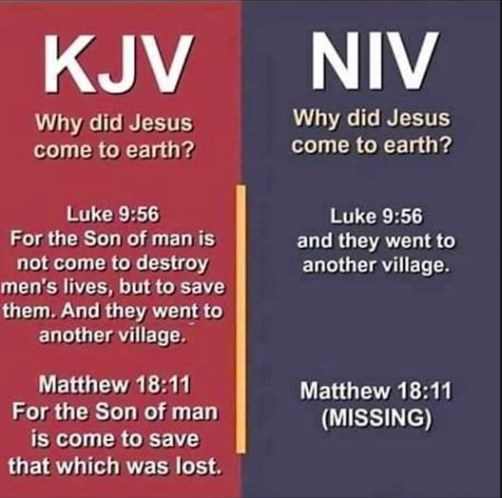
Why the Alexandrian Texts Are Considered Corrupt
1. Origin in Egypt
Egypt is often associated with corruption in the Bible (e.g., Deuteronomy 17:16, Revelation 11:8).
KJV-Only advocates argue that God would not preserve His pure Word in a place known for heresies.
2. Missing Passages
The
Alexandrian manuscripts often lack entire sections of Scripture (e.g.,
John 7:53-8:11, Mark 16:9-20), which raises suspicion of tampering.
3. Influence of Gnostic Thought
Some
scholars believe early Alexandrian scribes were influenced by
Gnosticism, a heretical belief system that distorts Christian doctrine.
4. Contradictions Among the Manuscripts
The Alexandrian texts (Codex Vaticanus and Codex Sinaiticus) often disagree with each other, suggesting they are not reliable.
References from KJV-Only Scholars
1.
Dr. David Otis Fuller – Which Bible? (Argues for the superiority of the
Textus Receptus and exposes problems with modern translations.)
2.
Dr. Peter Ruckman – The Christian’s Handbook of Manuscript Evidence
(Strongly argues against the NIV and modern textual criticism.)
3. Gail Riplinger – New Age Bible Versions (Claims the NIV and other versions are influenced by New Age doctrines.)
4. Dr. Edward F. Hills – The King James Version Defended (Argues that the KJV is the providentially preserved Word of God.)
5.
Dean John William Burgon – The Revision Revised (Criticized Westcott
& Hort’s Greek text, defending the Traditional Text.)
Conclusion
KJV-Only
scholars reject the NIV because they believe it is based on corrupt
Alexandrian manuscripts, removes key doctrines, and was influenced by
liberal theology. They argue that the KJV, based on the Textus Receptus
and the Masoretic Text, is the true, preserved Word of God.
Here
is a list of altered and missing verses in the NIV compared to the King
James Version (KJV), along with explanations of why KJV-Only advocates
believe these changes are erroneous and dangerous to Christian doctrine.
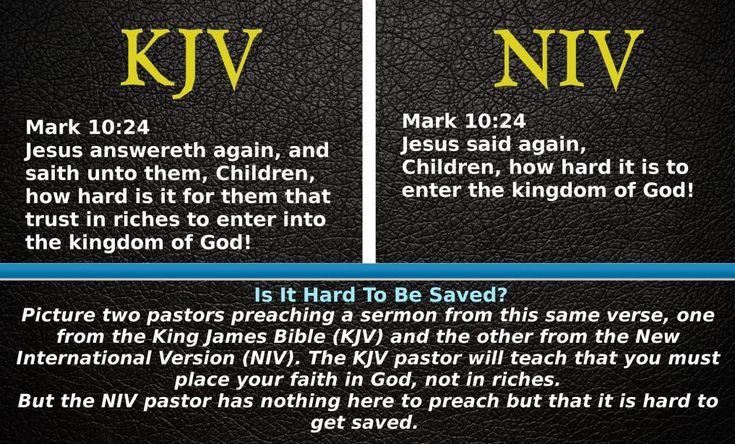
Missing Verses in the NIV
The following verses are completely removed from the NIV. In many cases, they are footnoted but not included in the main text.
These
omissions are troubling to KJV-Only believers because they remove key
doctrinal statements about salvation, fasting, spiritual warfare, and
the reality of hell.

Altered Verses in the NIV (Doctrinal Changes)
In many cases, the NIV changes words or phrases, subtly affecting doctrine. Below are some examples of serious alterations.
1. 1 Timothy 3:16 – The Deity of Christ
KJV: "God was manifest in the flesh…"
NIV: "He appeared in the flesh…"
Issue:
The NIV removes "God" and replaces it with "He," making the verse
ambiguous. The KJV affirms that Jesus is God, while the NIV weakens this
doctrine.
2. Colossians 1:14 – The Blood of Christ
KJV: "In whom we have redemption through his blood, even the forgiveness of sins."
NIV: "In whom we have redemption, the forgiveness of sins."
Issue: The NIV removes "through his blood," downplaying the importance of Christ’s blood for redemption (Hebrews 9:22).
3. Isaiah 14:12 – Lucifer Becomes "Morning Star"
KJV: "How art thou fallen from heaven, O Lucifer, son of the morning!"
NIV: "How you have fallen from heaven, morning star, son of the dawn!"
Issue:
"Morning Star" is a title given to Jesus in Revelation 22:16. The NIV
confuses Lucifer (Satan) with Christ, creating a theological problem.
4. Luke 4:4 – The Word of God Omitted
KJV: "Man shall not live by bread alone, but by every word of God."
NIV: "Man shall not live on bread alone."
Issue: The NIV removes "but by every word of God," weakening the doctrine of Scriptural authority.
5. 1 John 5:7 – The Trinity Weakened
KJV: "For there are three that bear record in heaven, the Father, the Word, and the Holy Ghost: and these three are one."
NIV: "For there are three that testify."
Issue: The NIV removes a clear statement of the Trinity, weakening the biblical defense of this doctrine.
6. Philippians 2:6 – Christ’s Equality with God Changed
KJV: "Who, being in the form of God, thought it not robbery to be equal with God."
NIV: "Who, being in very nature God, did not consider equality with God something to be used to his own advantage."
Issue: The NIV implies that Jesus wasn’t equal with God, contradicting the doctrine of Christ’s divinity.
7. Micah 5:2 – Christ’s Eternality Altered
KJV: "Whose goings forth have been from of old, from everlasting."
NIV: "Whose origins are from of old, from ancient times."
Issue: The KJV affirms that Jesus is eternal, while the NIV makes it sound like He had an origin.
8. Mark 1:2 – Prophecy Misattributed
KJV: "As it is written in the prophets, Behold, I send my messenger before thy face…"
NIV: "As it is written in Isaiah the prophet…"
Issue:
The prophecy quoted is actually from Malachi 3:1 and Isaiah 40:3. The
NIV incorrectly attributes it only to Isaiah, creating an error.
9. Daniel 3:25 – The Fourth Man in the Fire Changed
KJV: "The fourth is like the Son of God."
NIV: "The fourth looks like a son of the gods."
Issue: The KJV points to Jesus Christ appearing in the fire, while the NIV makes it sound like a pagan deity.
10. Acts 2:30 – Christ's Resurrection Prophecy Weakened
KJV: "…according to the flesh, he would raise up Christ to sit on his throne."
NIV: "…he would place one of his descendants on his throne."
Issue: The KJV directly states that Christ will sit on David’s throne, while the NIV weakens the prophecy by making it generic.
Conclusion: Why These Changes Are Problematic
1. Weakened Christology – Many NIV changes diminish Jesus’ deity, eternal existence, and equality with God.
2.
Removal of Key Doctrines – The blood of Christ, fasting, the Trinity,
and the necessity of God’s Word are all downplayed or removed.
3. Confusion in Prophecy – The NIV misattributes prophecies or alters meanings, leading to theological errors.
4.
Corrupt Manuscript Sources – The NIV is based on Alexandrian
manuscripts, which omit or modify verses, whereas the KJV is based on
the Textus Receptus, which KJV-Only advocates believe is the preserved
Word of God.

#ThegospelofBarnabas is fake!
The
Gospel of Barnabas is widely regarded by scholars and historians as a
forgery or pseudepigraphical work. It is not considered a canonical
gospel in Christianity, nor does it hold significant credibility within
Islamic or Jewish traditions.
Some key reasons for this assessment include:
1.
Historical Anachronisms: The text contains numerous historical errors,
including references to concepts and practices that did not exist during
the time of Jesus or Barnabas, such as the use of medieval feudal terms
and descriptions of the Muslim Shahada.
2.
Language and Style: The language and style of the work suggest it was
written in the late medieval period, likely in the 14th or 15th century,
long after the time of Barnabas, who was a companion of Paul in the New
Testament.
3. Discrepancies with Early
Christian Writings: The Gospel of Barnabas contradicts both the New
Testament and other early Christian texts, as well as historical Islamic
teachings. It presents an unusual account of Jesus' life that aligns
with neither Christian nor mainstream Islamic theology.
4.
Unknown Provenance: The earliest known manuscripts of the Gospel of
Barnabas date to the 16th century, and there is no evidence of its
existence before then.
Most scholars believe
the text was written to promote specific theological or political
agendas during the Middle Ages, likely by someone familiar with both
Christianity and Islam. It is not accepted as an authentic work by any
major religious tradition.
News video https://www.facebook.com/share/v/1A6SFnsVaq/
The King James Bible does not include a number of ancient writings that are considered apocryphal or pseudepigraphal (false or spurious writings), many of which claim to be gospels or texts about Jesus and the apostles. Here's a list of notable counterfeit or excluded gospels, along with general scholarly perspectives on their significance:
1. Gospel of Thomas
- Date: 2nd century AD
- Content: A collection of 114 sayings attributed to Jesus, often esoteric in nature, with Gnostic overtones.
- Why Excluded: It does not align with orthodox Christian theology and emphasizes secret knowledge.
- Scholarly Value: Rated highly for historical insight into early Christian sects but rejected as Scripture by the early church.
2. Gospel of Judas
- Date: 2nd century AD
- Content: Depicts Judas Iscariot not as a betrayer but as a favored disciple who acts at Jesus' request.
- Why Excluded: Promotes Gnostic beliefs that contradict mainstream Christian teachings.
- Scholarly Value: Fascinating for understanding Gnosticism but rated low for theological relevance.
3. Gospel of Peter
- Date: Late 2nd century AD
- Content: Focuses on the Passion narrative but includes fanciful details (e.g., a talking cross).
- Why Excluded: Contains theological errors and embellishments.
- Scholarly Value: Moderate; important for studying early Christian literary creativity.
4. Infancy Gospel of Thomas
- Date: 2nd-3rd century AD
- Content: Describes Jesus' childhood with miraculous events and mischief (e.g., killing a boy and resurrecting him).
- Why Excluded: Theologically unsound and filled with legendary material.
- Scholarly Value: Interesting for folklore studies but theologically rated very low.
5. Protoevangelium of James
- Date: 2nd century AD
- Content: Focuses on the birth and upbringing of Mary, the mother of Jesus.
- Why Excluded: Contains embellishments and legends not consistent with canonical Scripture.
- Scholarly Value: High for Marian studies but low for doctrinal accuracy.
6. Acts of Paul and Thecla
- Date: 2nd century AD
- Content: Tells the story of a female disciple of Paul named Thecla, who performs miracles.
- Why Excluded: Considered fictional and inconsistent with Pauline theology.
- Scholarly Value: Useful for studying early Christian perspectives on women but not as Scripture.
7. Gospel of Mary (Magdalene)
- Date: 2nd century AD
- Content: Features Mary Magdalene as a prominent disciple and teacher, emphasizing secret knowledge.
- Why Excluded: Gnostic in nature and promotes views counter to orthodox Christian doctrine.
- Scholarly Value: High for gender studies and Gnostic thought, but not canonical.
8. Gospel of the Egyptians
- Date: 2nd century AD
- Content: Includes esoteric teachings of Jesus, heavily influenced by Gnostic ideology.
- Why Excluded: Rejects bodily resurrection and orthodox teachings.
- Scholarly Value: Significant for understanding early Christian diversity.
9. Gospel of Philip
- Date: 3rd century AD
- Content: A Gnostic gospel with mystical sayings, including speculation on Jesus’ relationship with Mary Magdalene.
- Why Excluded: Heretical views inconsistent with Christian theology.
- Scholarly Value: Valuable for studying Gnosticism but irrelevant for orthodoxy.
10. The Didache
- Date: Late 1st or early 2nd century AD
- Content: A manual for Christian living and church practices, including teachings on baptism and communion.
- Why Excluded: Not a counterfeit gospel but excluded because it is more of a church manual than inspired Scripture.
- Scholarly Value: Highly rated for historical church practices.
11. Gospel of Barnabas
Date: Likely written in the 14th-16th century AD
Content:
Claims that Jesus was a prophet, denies His divinity, and states that
Muhammad was the final prophet, aligning with Islamic theology.
Why Excluded: Not an ancient document; it is a medieval forgery with anachronisms, written to support Islamic views of Jesus.
Scholarly Value: Very low, as it lacks credibility and historical accuracy.
Summary of Ratings
- Scholarly interest: High for understanding early Christianity and sectarian movements.
- Canonical value: Low due to doctrinal errors, Gnostic influence, or fictional elements.
The King James Bible excluded these texts because they lacked apostolic authorship, consistent theology, or broad acceptance in the early church.

1 Corinthians 13;10 "That which is perfect"
### The Active Gifts of the Holy Spirit in the Church: Their Purpose and Continuation
The
gifts of the Holy Spirit are essential aspects of the Christian faith,
given to believers for the edification and growth of the Church. These
gifts are not only active but are also vital for the Church's mission
and will continue to be so until the end times. Here, we will explore
the various gifts of the Holy Spirit, their purpose within the Church,
and why they will remain active until the rapture and the ultimate
revelation of God's perfect love.
#### The Gifts of the Holy Spirit
The
Bible outlines several spiritual gifts bestowed by the Holy Spirit,
primarily found in 1 Corinthians 12:8-10, Romans 12:6-8, and Ephesians
4:11-13. These include:
1. **Wisdom** - The ability to apply knowledge in a godly and practical way.
2. **Knowledge** - Insight into the deep things of God and His purposes.
3. **Faith** - Extraordinary confidence in God's power and promises.
4. **Healing** - The supernatural ability to restore health.
5. **Miracles** - The power to perform signs and wonders.
6. **Prophecy** - Speaking forth God's messages.
7. **Discerning of Spirits** - The ability to distinguish between different kinds of spirits.
8. **Tongues** - Speaking in languages unknown to the speaker.
9. **Interpretation of Tongues** - Understanding and explaining the meaning of tongues.
10. **Serving** - Helping others with a joyful heart.
11. **Teaching** - Instructing others in the faith.
12. **Encouragement** - Uplifting and motivating others.
13. **Giving** - Generously sharing resources.
14. **Leadership** - Guiding others with wisdom and humility.
15. **Mercy** - Showing compassion to those in need.
#### Purpose of the Gifts
The
primary purpose of these gifts is to build up the body of Christ.
Ephesians 4:12-13 states that these gifts are given "to equip his people
for works of service, so that the body of Christ may be built up until
we all reach unity in the faith and in the knowledge of the Son of God
and become mature, attaining to the whole measure of the fullness of
Christ." The gifts help believers grow in their faith, serve others
effectively, and work towards the unity and maturity of the Church.
#### Continuation of the Gifts
The gifts of the Holy Spirit will continue to be active in the Church for several reasons:
1.
**God's Indwelling Presence** - As long as the Holy Spirit dwells
within believers, His gifts will be active. The Spirit's work in
revealing Christ and His nature does not cease with the completion of
the Bible but continues through the lives of Christians.
2.
**Ongoing Mission** - The Church's mission to spread the Gospel and
make disciples of all nations requires the empowerment and guidance of
the Holy Spirit. The gifts are essential tools in fulfilling this Great
Commission.
3. **Edification of the Church** -
The Church is continually growing and needs ongoing edification. The
spiritual gifts help to build up the Church, encourage believers, and
bring unity and maturity.
4. **God's
Sovereignty** - God, in His sovereignty, has chosen to work through the
gifts of the Spirit. His plans and purposes are accomplished through
these gifts until the end of the age.
#### The Fulfillment of Time and God's Love
The
continuation of the gifts will persist until every person chosen by God
has come into His kingdom. When the rapture occurs, and the Church is
gathered before God, believers will fully know His perfect love. This
will be the time when "that which is perfect" has come, as mentioned in 1
Corinthians 13:10. In the fullness of time, God's perfect love will be
revealed to His Church, and the partial understanding and manifestations
of the gifts will give way to complete and eternal knowledge and love
in the presence of God.
Until that day, the
gifts of the Holy Spirit are indispensable for the life and mission of
the Church. They are divine tools given to believers to manifest God's
power, love, and truth in the world, drawing people to Christ and
strengthening the body of believers. As we await the fulfillment of
God's plan, let us embrace and faithfully steward the gifts of the Holy
Spirit, knowing that they are a foretaste of the glorious future that
awaits us in His presence.
### What Does 1 Corinthians 13:10 Mean?
Paul
is showing that love is eternal, while spiritual gifts are temporary.
This refers to godly love, from the Greek word "agape," meaning
sacrificial and selfless active love. Our knowledge of God and His plans
for the world is relatively limited.
The gifts
of the Spirit work by love—God's love—and reveal to us in part the love
of God while we are still in our earthly bodies. But when we are in
heaven, we won't need the gifts of the Spirit as we do on earth because
we will fully know God's love.
1 Corinthians 13
is known as the love chapter. Paul speaks about God's perfect love.
"Perfect" does not refer to the Word of God, as erroneous cessationists
might assume, suggesting that the gifts of the Spirit are no longer
needed or active in the church.
The gifts of
the Spirit will be active in the church as long as the church is indwelt
by the Holy Spirit on earth. The Holy Spirit's nature did not stop
revealing the nature of Christ to, in, and through His body after the
completion of the King James Version of the Bible. The job of the Holy
Spirit is to reveal Christ, who is the prophet, healer, baptizer,
performer of signs and wonders, miracle worker, author of our faith,
all-knowing, all-wise, and all-revealing. Every gift of the Spirit in 1
Corinthians 12 is a manifestation of the Spirit revealing who Jesus
Christ is to and through His Church. Paul did not mention these gifts in
1 Corinthians 12 just to tell us in 1 Corinthians 13 that we don't need
them anymore. In fact, we do and will continue to need them until the
fullness of the body of Christ is complete.
Ephesians
4:11-13 states: "So Christ himself gave the apostles (New Testament
apostles beyond the twelve apostles of Christ), the prophets (who
prophesy, not just proclaim the gospel), the evangelists, the pastors,
and teachers, to equip his people for works of service, so that the body
of Christ may be built up until we all reach unity in the faith and in
the knowledge of the Son of God and become mature, attaining to the
whole measure of the fullness of Christ."
Jesus
said that the Holy Spirit has come to reveal the person of Christ.
According to 1 Corinthians 12:4-11, the gifts of the Spirit testify to
the nature and ministry of Jesus. Anyone who is a cessationist and
denies that these gifts are for today is also denying the Holy Spirit's
ongoing ministry to reveal the person of Christ (John 16:13-14).
Furthermore, equating the manifest testimony of Christ through the gifts
of the Holy Spirit with the work of the devil is blasphemy against the
Holy Spirit (Matthew 12:31-32), which is an unforgivable sin.


No comments:
Post a Comment